Yes, emissions testing is required in Texas for vehicles registered in 17 specific urban counties, such as Harris and Dallas. While the state abolished annual safety inspections in 2025, residents in these designated areas must still pass an emissions test to renew their vehicle registration.
Sorting through conflicting reports about Texas vehicle inspections can be a headache for any Houston driver. You may have heard that safety inspections are ending in 2025; however, that does not mean you are off the hook for emissions testing in 2026. Misinterpreting the law could lead to a rejected registration or a failed test right when you need your vehicle most. At A.B.A. Auto Services, we believe in keeping our community informed with practical, expert advice. In this guide, we break down House Bill 3297 to explain the critical difference between safety and smog requirements. You will learn which 17 Texas counties still require testing, find out if your specific vehicle is exempt, and discover the most common reasons for a failed test in the Houston area. Staying compliant does not have to be complicated when you have the right facts.
The Short Answer: Is Emissions Testing Required in Texas for 2026?
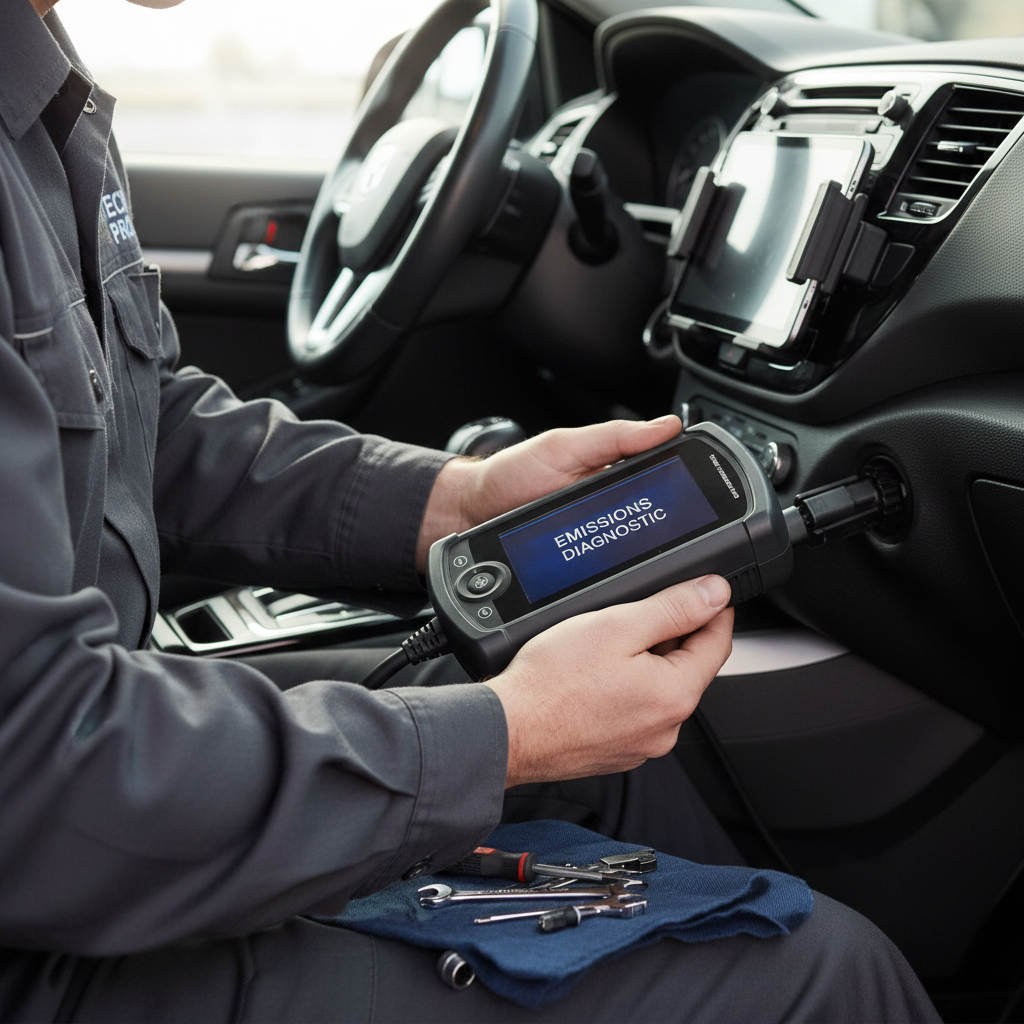
The direct answer to whether is emissions testing required in texas for 2026 is a firm yes for drivers in the Houston area. While House Bill 3297 effectively eliminated the annual vehicle safety inspection for non-commercial vehicles on January 1, 2025, it did not abolish the emissions program. If your vehicle is registered in Harris, Fort Bend, Montgomery, Brazoria, or Galveston County, you are still legally obligated to pass an On-Board Diagnostics (OBD-II) emissions test before you can renew your registration.
Many local motorists assume the new law allows them to bypass the inspection station entirely. However, the legislation only removed the check for physical components like windshield wipers, brakes, and light bulbs for personal cars. Residents in the 17 designated emissions counties must continue to visit a certified station to ensure their vehicle's computer system reports no environmental faults. This applies to most gasoline-powered vehicles between 2 and 24 years old. For business owners, commercial emission inspections remain a critical requirement to keep fleets operational. Skipping this step will result in a rejected registration application at the tax office or through the online portal. Understanding the distinction between these two types of inspections is key to staying compliant.
Understanding House Bill 3297: Safety vs. Emissions Inspections
House Bill 3297 changed the landscape of Texas vehicle ownership, but it is important to distinguish between the two separate components of the traditional inspection process. Historically, a vehicle inspection consisted of a safety check and, in certain counties, an emissions test. The safety portion involved a physical examination of equipment such as brake systems, headlamps, turn signals, steering components, and tire tread depth. As of January 1, 2025, the state no longer requires this physical equipment check for non-commercial vehicles.
Conversely, the emissions portion remains fully intact for residents in the Houston-Galveston area. This test utilizes the On-Board Diagnostics (OBD-II) system to communicate with your vehicle’s engine control unit. It monitors diagnostic trouble codes to ensure the car is operating within federal air quality standards. When asking is emissions testing required in texas, the answer hinges on this distinction; safety is out, but smog checks remain mandatory for our region because of federal air quality mandates.
Although you save time by not having your tires or wipers checked, the cost has not entirely disappeared. Texas implemented an Inspection Program Replacement Fee of $7.50. This charge is automatically added to your annual registration bill at the tax office or online portal. This fee replaces the portion of the inspection cost that previously supported state programs. For those managing business assets, commercial emission inspections are still a mandatory annual requirement to maintain fleet legality. Understanding these legal shifts is a key part of your vehicle preparation tips for the coming year.
The 17 Texas Counties That Still Require Emissions Testing
Determining if is emissions testing required in texas for your vehicle depends entirely on your county of registration. While the state has 254 counties, only 17 currently mandate annual emissions checks to comply with the federal Clean Air Act. These counties are primarily clustered around major metropolitan hubs where air quality monitoring is most stringent.
For residents in the Houston-Galveston area, the requirement remains active for the following five counties: - Harris - Fort Bend - Montgomery - Brazoria - Galveston
If you commute from outside these areas, you may still be subject to the rules if your vehicle is registered within one of the other 12 designated counties. The Dallas-Fort Worth region includes Collin, Dallas, Denton, Ellis, Johnson, Kaufman, Parker, Rockwall, and Tarrant. In the Austin area, Travis and Williamson counties require testing, while El Paso County handles the western portion of the state.
Looking ahead, Bexar County is slated to join this list on November 1, 2026. This is a critical update for anyone planning a move to the San Antonio area or managing a fleet with regional branches. Staying current on these geographic boundaries is an essential part of your vehicle preparation tips to avoid unexpected registration blocks. For business owners operating across county lines, keeping up with commercial emission inspections ensures that every vehicle in the fleet remains compliant regardless of its home base.
Which Vehicles Are Exempt From Emissions Testing?
Understanding which vehicles bypass the electronic tailpipe check is just as important as knowing the county requirements. Texas law provides several specific exemptions even if you live in Harris or Fort Bend County. First, new gasoline powered vehicles are exempt for the first two years of their life. This exemption covers the current model year and the preceding year, as these vehicles are expected to have functioning factory emissions controls.
On the other end of the spectrum, vehicles older than 24 years are considered classic or antique and no longer require an emissions test. If you are driving a vintage 1990s truck or a classic muscle car, the OBD-II requirement does not apply. Additionally, certain vehicle types are entirely excluded from the program. Motorcycles, mopeds, and all diesel powered vehicles are exempt from emissions testing in Texas.
Fully electric vehicles (EVs) are also exempt because they produce zero tailpipe emissions. This is a common point of confusion when people ask is emissions testing required in texas for their Tesla or Rivian. If your vehicle falls into one of these categories, you can proceed directly to registration renewal without a trip to our shop for a smog check. For business owners, these exemptions can simplify your vehicle preparation tips for your fleet. However, remember that commercial emission inspections still apply to most gasoline powered work vans and trucks within the 2 to 24 year age bracket.
Houston Registration Requirements for Harris, Fort Bend, and Montgomery Counties
Drivers living near our shop on Dunlap Street or commuting through the South Houston and Missouri City areas must navigate a slightly more complex renewal process than those in rural Texas. In counties like Harris, Fort Bend, and Montgomery, the registration workflow remains a sequential two-part process. This is because the state's "Two Steps, One Sticker" program still functions exactly as named for our region; it has effectively become a one-step process only for drivers in non-emissions counties who can now skip the inspection station entirely.
If you find yourself wondering is emissions testing required in texas for your specific Houston zip code, the answer is yes for all residents within these major metropolitan counties. To stay compliant, first verify your registration expiration month on your windshield sticker. You must complete your emissions test within 90 days of your registration expiration date. Visit a certified station like A.B.A AUTO SERVICES, located conveniently for those traveling along Beltway 8 or Highway 90. Our technicians will perform the OBD-II scan and electronically transmit the results to the Texas Department of Motor Vehicles database.
Once the vehicle passes, the second step is to pay your registration fees. You can do this online through the Texas DMV portal, by mail, or in person at a local tax office. Reviewing vehicle preparation tips before your appointment can help ensure a smooth experience. For business owners managing local delivery fleets or work trucks, we also provide commercial emission inspections to keep your operations moving. Completing your test early in your renewal window ensures your digital record is updated well before you attempt to renew your registration online.
Commercial Fleet Emissions Requirements in 2026
Business owners managing local fleets must recognize that the elimination of safety inspections for personal cars does not grant a free pass to work trucks. Commercial vehicles are subject to rigorous oversight to maintain air quality standards in Harris County. If you are questioning if is emissions testing required in texas for your business assets, the answer is a definitive yes for gasoline-powered fleet vehicles between 2 and 24 years old.
A.B.A AUTO SERVICES specializes in commercial emission inspections for delivery vans, box trucks, and service vehicles. We understand that time is money for contractors and logistics providers. A single expired registration due to a missed OBD-II test can lead to costly citations and operational delays that ripple through your supply chain. By integrating these mandatory checks into your vehicle preparation tips, you ensure your fleet stays compliant and your drivers stay on the road. Our station on Dunlap Street is equipped to handle the specific technical requirements of professional fleets, helping you avoid the administrative bottlenecks that often occur at the tax office.
Common Reasons for a Failed Emissions Test in Houston
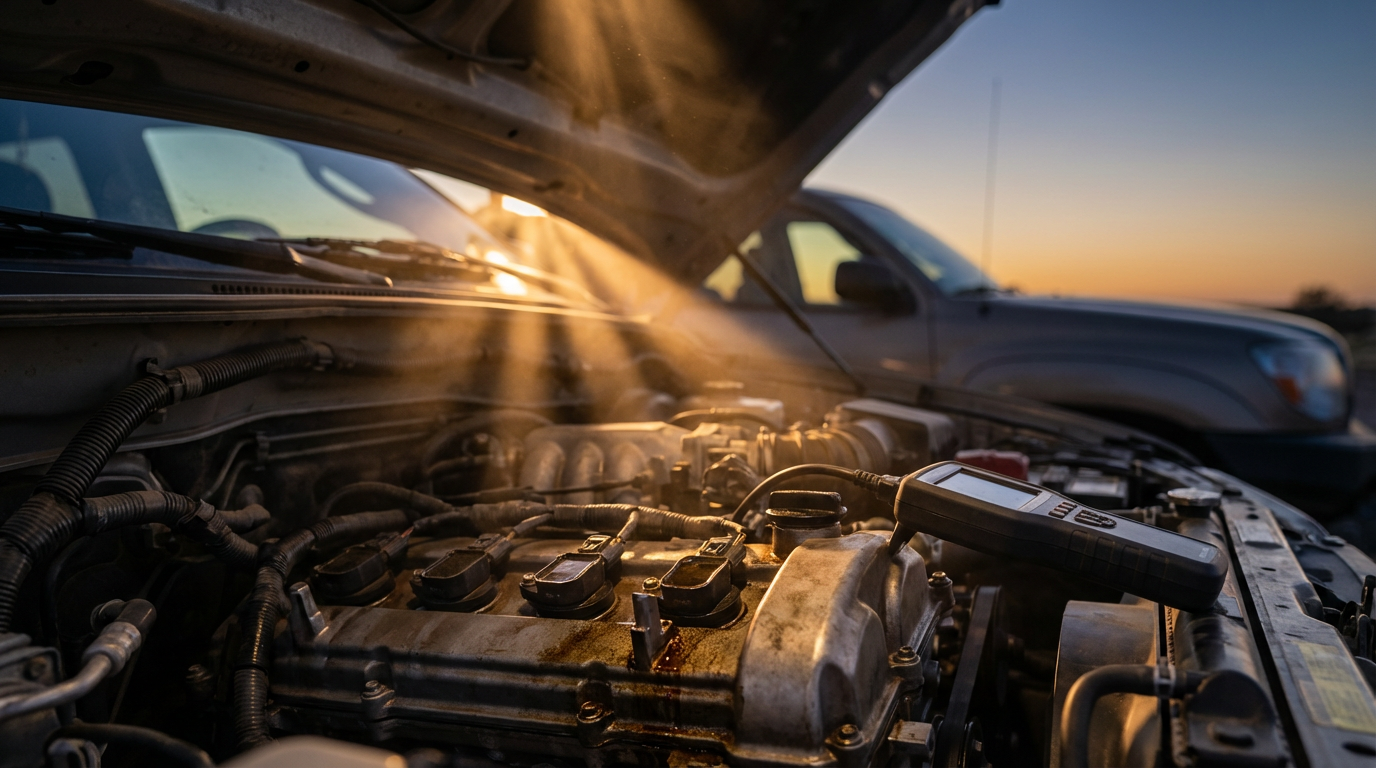
A vehicle failing its OBD-II scan often stems from a few predictable issues that you can identify before arriving at our shop. The most frequent culprit is an illuminated Check Engine light. If this light is on, the vehicle computer has already logged a diagnostic trouble code, which results in an automatic failure. Common triggers include a faulty oxygen sensor, which regulates the air-to-fuel ratio, or a degraded catalytic converter that can no longer effectively neutralize exhaust gases.
One often overlooked cause for failure is a Not Ready status on the vehicle internal monitors. This happens if you have recently replaced your battery or cleared error codes right before your appointment. The computer needs a period of active driving, often called a drive cycle, to complete its self-tests. If you are preparing a fleet, following consistent vehicle preparation tips helps avoid these technical setbacks.
Understanding why is emissions testing required in texas helps clarify that the state is looking for these specific electronic handshake failures. For business owners, scheduling commercial emission inspections well before the registration deadline allows time to address EVAP leaks or sensor malfunctions. Simple maintenance, such as ensuring your gas cap is tightened and seals correctly, can also prevent a failed test due to fuel vapor leaks.